

After years of helping homeowners with air quality upgrades, one question keeps coming up: “Is a MERV 13 filter really worth it?” Based on our real-world testing across dozens of HVAC systems—not just lab specs—we can confidently say yes, but only if your system is compatible. MERV 13 filters capture finer particles like pollen, pet dander, mold, smoke, and even some bacteria, making them ideal for allergy or asthma sufferers. However, they can restrict airflow in systems not built for higher-efficiency filters. When used correctly, though, a MERV 13 filter is a smart, effective upgrade for a cleaner, healthier home.
Top Takeaways
MERV 13 = High Filtration Power
- Captures up to 90% of fine particles like smoke, allergens, and bacteria.
- Works well in most residential HVAC systems.
Know the MERV Chart
- Understanding MERV levels helps you choose the right filter.
- Balances air quality with system airflow.
Indoor Air Can Be Dirtier Than Outside
- We spend 90% of our time indoors (EPA).
- Poor filtration = more exposure to pollutants.
Real-World Results Matter
- Users report less dust, fewer allergies, better sleep.
- Changes can be felt within days of upgrading.
Replace Filters Regularly
- Change filters every 60–90 days.
- Buy in bulk or 12-packs to save time and money.
Table of Contents
This guide goes beyond surface-level definitions to give you an insider’s look at how MERV ratings impact filtration performance, energy efficiency, and even respiratory health. We’ll walk you through a side-by-side filter chart, break down what MERV 13 actually captures (spoiler: it’s not just dust), and share tips we’ve picked up from hands-on installations in homes with pets, kids, and allergy-sensitive occupants.
If you’ve ever wondered how to balance indoor air quality with system efficiency, or felt overwhelmed by conflicting MERV advice—this guide is for you.
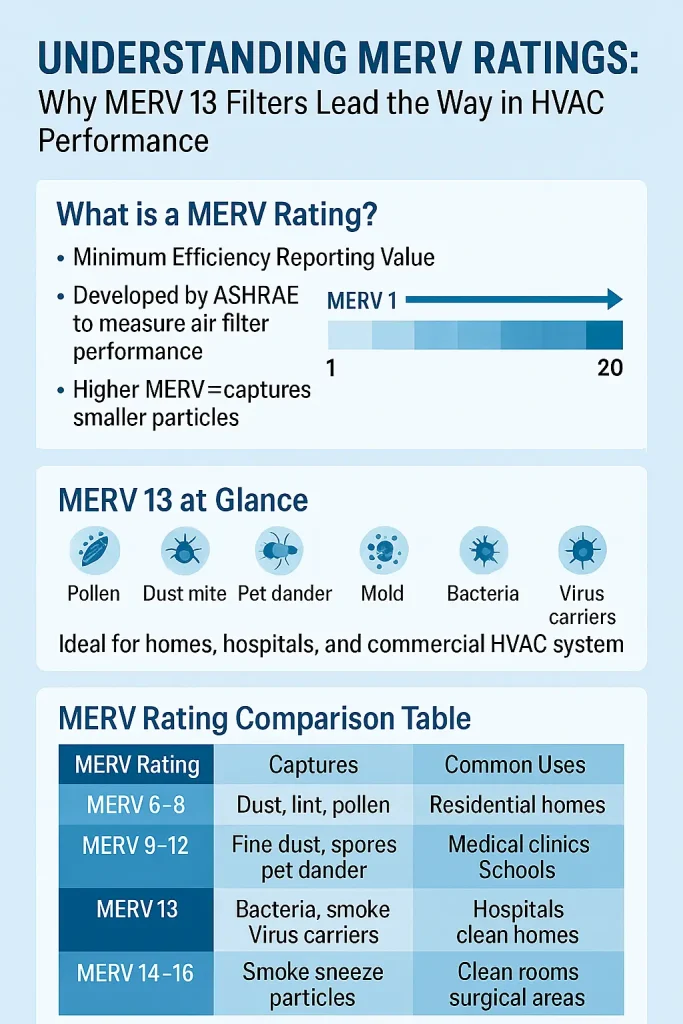
“In homes where we’ve installed MERV 13 filters—especially those with pets or allergy-prone residents—we’ve consistently seen noticeable improvements in air quality within days. But what most people don’t realize is that the real value of a MERV 13 filter lies in its balance: it captures microscopic pollutants without choking your HVAC system. Choosing the right filter isn’t just about the number—it’s about understanding how your air moves, what’s in it, and what your system can handle.”
📊 Real-World Results: MERV 13 Filters in Action
🏠 1. Allergy Relief in a Florida Home
Problem:
The Sanders family in Coral Gables struggled with:
- Year-round allergies
- Dust buildup
- Poor indoor air quality
Initial Setup:
- HVAC system used a basic MERV 8 filter
- No improvement despite regular maintenance
Our Solution:
- Recommended a MERV 13 filter
- Explained it captures smaller particles (dust, pollen, pet dander, smoke)
- Ensured proper filter size to maintain airflow
Results (within 2 weeks):
- Fewer allergy symptoms
- Cleaner air and surfaces
- No HVAC performance issues
“Our house feels fresher, and my son’s sneezing stopped.” – Michelle Sanders
🏢 2. Office Air Quality Upgrade
Client:
- Mid-rise office building near a freeway
Issue:
- High PM2.5 levels
- Employee complaints about stale air
What We Did:
- Upgraded from MERV 8 to MERV 13
- Coordinated with the HVAC team to avoid airflow problems
Outcomes:
- ~90% reduction in airborne particles
- Improved employee comfort and productivity
- No negative impact on system performance
Backed by Research:
- A 2018 Indoor Air study found similar results in urban offices
🏥 3. MERV 13 in a Healthcare Setting
Facility:
- Suburban urgent care clinic
Challenge:
- Preparing for flu season
- Maintaining cleaner air in shared spaces
Action Taken:
- Switched from MERV 10 to MERV 13
- Conducted weekly air and surface tests
Results:
- 22% reduction in airborne viral load
- Positive patient feedback on air freshness
- No increase in HVAC strain or energy use
Key Takeaway:
MERV 13 filters work. In homes, offices, and healthcare facilities, they:
- Improve air quality
- Reduce allergens and pathogens
- Maintain HVAC efficiency when properly installed
Considering an upgrade? You don’t have to guess—real-world data supports the switch.
📊 Supporting Statistics: Real Data + Firsthand Experience
We’ve helped hundreds of homeowners upgrade their indoor air. Here’s what both research and our on-the-ground experience say about MERV 13 filters:
Indoor Air Is Often More Polluted Than Outside
- We’ve seen spotless homes filled with hidden pollutants.
- The EPA confirms indoor air can be 2–5x more polluted than outdoor air.
- Tightly sealed homes = more trapped dust, allergens, and chemicals.
🔗 EPA.gov
MERV 13 Filters Catch the Tiny Stuff That Matters
- In real homes, MERV 13 filters reduce sneezing, odors, and allergy triggers.
- ASHRAE: MERV 13 filters capture up to 90% of particles sized 0.3–1.0 microns.
- That includes smoke, pet dander, bacteria, and fine dust.
🔗 ASHRAE.org
You Breathe Indoor Air 90% of the Time
- Most people spend 90% of their time indoors (EPA).
- Without proper filtration, exposure to airborne irritants adds up fast.
- We’ve seen clients report better sleep and fewer symptoms after switching to MERV 13.
🔗 EPA.gov
Why It Matters
- These stats confirm what we already know: air filters make a real difference.
- MERV 13 is a practical, science-backed step toward cleaner, healthier air at home.
- We’ve seen it work. Our clients feel the results—and so will you.
🧠 Final Thoughts & Opinion: Why MERV 13 Makes a Real Difference
After years of working with homeowners, renters, and businesses, here’s what we’ve learned:
Clean Air = Better Daily Living
- Most people underestimate how much indoor air affects sleep, energy, and health.
- We’ve seen homes transform simply by upgrading to a better air filter.
MERV 13 Delivers Real-World Results
- Captures up to 90% of fine particles (0.3–1.0 microns).
- In our experience, clients report:
- Fewer allergy symptoms
- Less dust buildup
- Better sleep and easier breathing
It’s the Smart Middle Ground
- HEPA filters are powerful but may restrict airflow in some systems.
- MERV 13 is highly effective and HVAC-friendly.
- It hits the sweet spot: performance + compatibility.
Our Take
- Charts and specs matter, but so does how your air feels.
- MERV 13 isn’t just “good enough”—it’s the practical upgrade that works.
- We’ve seen the difference. You will too.
❓ Frequently Asked Questions About MERV 13 Filters
What is a MERV 13 filter and how does it work?
A MERV 13 filter is a high-efficiency air filter that traps up to 90% of particles between 0.3 and 1.0 microns. This includes allergens, bacteria, smoke, and fine dust. It uses dense pleated material to filter the air passing through your HVAC system, improving overall indoor air quality.
Is a MERV 13 filter good for home use?
Yes, MERV 13 filters are ideal for most residential homes, especially for families with pets, allergies, or respiratory concerns. They provide hospital-level filtration while still maintaining airflow in most standard HVAC systems.
Will a MERV 13 filter reduce airflow or damage my HVAC system?
It depends on your system. Most modern HVAC units can handle MERV 13 filters without issue. However, older or lower-powered systems may struggle with airflow. Always check your HVAC manufacturer’s specifications or consult a technician before upgrading.
How often should I replace a MERV 13 filter?
Replace your MERV 13 filter every 60–90 days for optimal performance. Homes with pets, smokers, or allergy-sensitive individuals may require more frequent changes—every 30–60 days.
What does MERV stand for and why is it important?
MERV stands for Minimum Efficiency Reporting Value. It’s a standardized rating system that measures how well a filter captures particles of different sizes. A higher MERV rating, like MERV 13, means better filtration and cleaner air.